---
title: "RVATechData + AI Summit: My First Conference Experience"
description: A reflection on a first-time experience at the RVATech Data + AI Summit, highlighting the community energy and key takeaways from sessions and keynotes.
image: https://blog.ippon.tech/hubfs/undefined-Apr-16-2026-01-30-35-4343-PM.png
---
[Skip to main content](https://blog.ippon.tech/rvatechdata-ai-summit-my-first-conference-experience#main)
[   ](https://ipponusa.com/)
- [Home](https://ipponusa.com)
- [Show submenu for About About](https://ipponusa.com/about-us)
- [Who We Are](https://ipponusa.com/who-we-are)
- [Careers](https://ipponusa.com/careers)
- [Show submenu for Our Partners Our Partners](https://ipponusa.com/our-partners/)
- [AWS](https://ipponusa.com/our-partners/aws/)
- [Snowflake](https://ipponusa.com/our-partners/snowflake/)
- [Databricks](https://ipponusa.com/our-partners/databricks/)
- [Microsoft](https://ipponusa.com/our-partners/microsoft/)
- [Show submenu for Services Services](https://ipponusa.com/services)
- [Snowflake](https://ipponusa.com/service/snowflake-concierge/)
- [Artificial Intelligence](https://ipponusa.com/service/artificial-intelligence/)
- [Data & Analytics](https://ipponusa.com/service/data-analytics/)
- [Cloud Strategy](https://ipponusa.com/service/cloud-strategy/)
- [Platform Modernization](https://ipponusa.com/service/platform-moderization/)
- [Product Innovation](https://ipponusa.com/service/product-innovation/)
- [Operating Model](https://ipponusa.com/service/operating-model/)
- [Blogs](https://blog.ippon.tech/)
- [Success Stories](https://ipponusa.com/success-stories/)
- [Show submenu for Resources Resources](https://ipponusa.com/resources/)
- [eBooks](https://ipponusa.com/ebooks/)
- [The Data Pour](https://info.ippon.tech/the-data-pour)
- [Videos & Webinars](https://info.ippon.tech/videos-and-webinars)
- [Media Center](https://ipponusa.com/media-center/)
Search
Open main navigation
Close main navigation
- [Home](https://ipponusa.com)
- Show submenu for About About
- About
- [About](https://ipponusa.com/about-us)
- [Who We Are](https://ipponusa.com/who-we-are)
- [Careers](https://ipponusa.com/careers)
- Show submenu for Our Partners Our Partners
- Our Partners
- [Our Partners](https://ipponusa.com/our-partners/)
- [AWS](https://ipponusa.com/our-partners/aws/)
- [Snowflake](https://ipponusa.com/our-partners/snowflake/)
- [Databricks](https://ipponusa.com/our-partners/databricks/)
- [Microsoft](https://ipponusa.com/our-partners/microsoft/)
- Show submenu for Services Services
- Services
- [Services](https://ipponusa.com/services)
- [Snowflake](https://ipponusa.com/service/snowflake-concierge/)
- [Artificial Intelligence](https://ipponusa.com/service/artificial-intelligence/)
- [Data & Analytics](https://ipponusa.com/service/data-analytics/)
- [Cloud Strategy](https://ipponusa.com/service/cloud-strategy/)
- [Platform Modernization](https://ipponusa.com/service/platform-moderization/)
- [Product Innovation](https://ipponusa.com/service/product-innovation/)
- [Operating Model](https://ipponusa.com/service/operating-model/)
- [Blogs](https://blog.ippon.tech/)
- [Success Stories](https://ipponusa.com/success-stories/)
- Show submenu for Resources Resources
- Resources
- [Resources](https://ipponusa.com/resources/)
- [eBooks](https://ipponusa.com/ebooks/)
- [The Data Pour](https://info.ippon.tech/the-data-pour)
- [Videos & Webinars](https://info.ippon.tech/videos-and-webinars)
- [Media Center](https://ipponusa.com/media-center/)
- Search
- [Contact Us](https://ipponusa.com/contact/)
[Contact Us](https://ipponusa.com/contact/)
# RVATechData + AI Summit: My First Conference Experience
by [Priya Pendyala](https://blog.ippon.tech/author/priya-pendyala)
April 16, 2026
# **RVATechData + AI Summit: My First Conference Experience**
Last week I spent a day at the RVATech Data + AI Summit, and it really stood out. The room was full of data professionals, AI practitioners, and tech leaders, and you could feel the shared energy right from the start. People were there to learn from each other, build connections, and work through real questions together. That set the tone for the entire day.
The morning kicked off with an opening keynote from Odean (Dean) Maye. He talked about Virginia's potential as a serious AI hub, not just because of data centers, but because of the talent, policy environment, and growing community around it. What I enjoyed most was the Q&A that followed. He handled the questions well, and my main takeaway was that if AI is used thoughtfully, it can create real value and help people focus on more meaningful work.
Once the breakout sessions began, Karen Akens and Brett Burnam talked about what it really takes to get enterprise data ready for AI, and their message was hard to argue with. Before you start thinking about models or tools, you need to know where your data lives, who owns it, and whether it is actually usable. It sounds obvious, but based on how often this same point kept coming up in other sessions and conversations, it is clearly something a lot of organizations are still working through.
One of the highlights for me was a hands-on workshop led by Chris Busse from SingleStone. People had their laptops open, and I was right there with them, trying to work through the exercises. We were doing things like checking whether a piece of code was correct, figuring out what part of the code defines an endpoint, understanding a Python codebase, and using Claude to work through those questions instead of doing it all manually. It was a very different way of interacting with code, and it took a moment to get used to the idea that you are guiding the AI rather than writing everything yourself.
What made it click even more was a conversation I had with another attendee, Shawn during the lunch hour. They told me about how they have been using Claude in their everyday work, things like building presentations and correcting Excel sheets, and how effective it has been for tasks that would normally eat up a lot of time. Hearing someone talk about using it that practically, not in theory but in their actual workflow, made it feel a lot more real to me.
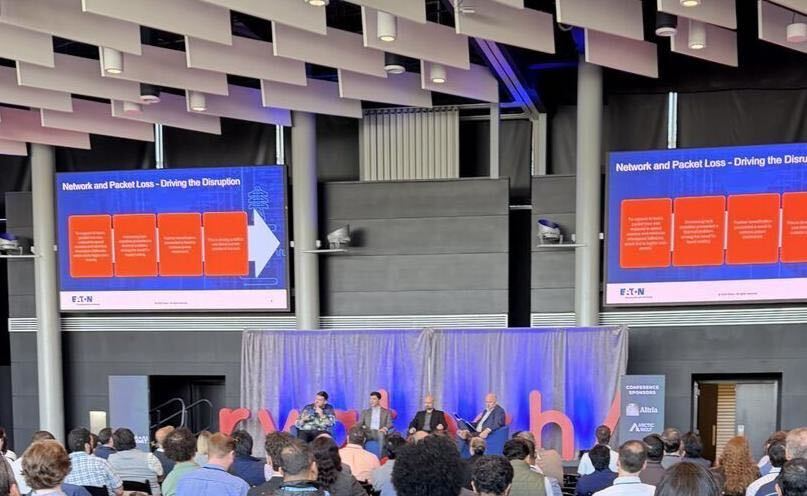
Another session I am glad I caught was Steven MacLauchlan from the Virginia State Police. What I liked about his talk was that he described how his team picks specific problems that are manageable in scope, solves them, and uses those results to show people what AI can actually do. Once people see it working on something they care about, they are much more open to the next idea. You do not need a massive plan. You just need a good starting point.
David Bray closed things out with a keynote that brought the day full circle. He talked about what leadership looks like as AI becomes more embedded in how we work and make decisions. What impressed me was how he connected ideas from history to what is happening right now. The part I keep coming back to is his point about trust. The more capable these tools become, the more important it is that the people building and using them are doing so responsibly. He closed with a line that felt like the right way to end the day: be bold, be brave, and be benevolent.
AI is moving fast, but the ability to think critically and ask the right questions is still what makes the difference. It was a packed day, and I came away with more to think about than I expected. What I appreciated most is that people were open about where they are on this journey, what is working, and what they are still figuring out. That honesty made the whole experience feel worthwhile. Richmond clearly has something building in the data and AI space, and I am glad I was in the room for it.
Curious if others are seeing the same thing. Most teams are not struggling with access to AI tools, but with how to apply them in a way that is grounded in real data and aligned to the business. That is a big part of the work we are focused on at Ippon today, helping organizations get clear on where they are and what it takes to move forward. If that resonates, we have been helping teams work through it with a Data and AI Readiness Assessment: [https://ipponusa.com/service/data-and-ai-readiness-assessment/](https://ipponusa.com/service/data-and-ai-readiness-assessment/)
## Related Articles
##### [ Data • July 1, 2025 The Evolution of AI : Part Two 4 min read](https://blog.ippon.tech/the-evolution-of-ai-part-two)
##### [ Data • June 25, 2025 Data Management in the Age of Generative AI 7 min read](https://blog.ippon.tech/data-management-in-the-age-of-generative-ai)
### Comments
### Subscribe to Our Blog!
Stay informed with the latest insights and updates by signing up for our weekly blog newsletter – delivered straight to your inbox!
[Back to blog homepage »](https://blog.ippon.tech/)

Ippon is a consulting and expertise firm, who is convinced that technology is a source of progress for society. We help our clients leverage their digital assets to design an appropriate strategy and deploy their transformation roadmap at scale.
#### Navigation
- [Home](https://ipponusa.com/)
- [About](https://ipponusa.com/about-us/)
- [Services](https://ipponusa.com/services/)
- [Blogs](https://blog.ippon.tech/?__hstc=223043268.1036d82247623b329dfefe4e92697801.1714729179243.1714729179243.1714729179243.1&__hssc=223043268.2.1714729179244&__hsfp=803678701)
- [eBooks](https://ipponusa.com/ebooks/)
- [The Data Pour](https://info.ippon.tech/the-data-pour?__hstc=223043268.1036d82247623b329dfefe4e92697801.1714729179243.1714729179243.1714729179243.1&__hssc=223043268.2.1714729179244&__hsfp=803678701)
[Contact Us](https://ipponusa.com/contact/)
[Join Us](https://ipponusa.com/careers/)
#### Services
- [Data & Analytics](https://ipponusa.com/service/data-analytics/)
- [Cloud Strategy](https://ipponusa.com/service/cloud-strategy/)
- [Artificial Intelligence](https://ipponusa.com/service/artificial-intelligence/)
- [Operating Model](https://ipponusa.com/service/operating-model/)
- [Platform Modernization](https://ipponusa.com/service/platform-moderization/)
- [Product Innovation](https://ipponusa.com/service/product-innovation/)
#### Ippon International
- [France](https://fr.ippon.tech/?__hstc=223043268.1036d82247623b329dfefe4e92697801.1714729179243.1714729179243.1714729179243.1&__hssc=223043268.2.1714729179244&__hsfp=803678701)
- [Australia](https://au.ippon.tech/?__hstc=223043268.1036d82247623b329dfefe4e92697801.1714729179243.1714729179243.1714729179243.1&__hssc=223043268.2.1714729179244&__hsfp=803678701)
- #### Contact
- Ippon Technologies
[3431 West Leigh Street Richmond, VA 23230, USA](https://maps.app.goo.gl/RySm6SAwZnsxeiLz9)
- [(844) 477- 6687](tel:8444776687)
- [Sales@ipponusa.com](mailto:Sales@ipponusa.com)
©Copyright 2024 Ippon USA. All Rights Reserved. | [Terms and Conditions](https://ipponusa.com/privacy-policy/) | [Privacy Policy](https://ipponusa.com/privacy-policy/) | [Website by Skol Marketing](https://skolmarketing.com/)
```json
{
"@context" : "https://schema.org",
"@type" : "BlogPosting",
"author" : {
"@type" : "Person",
"name" : "Priya Pendyala",
"url" : "https://blog.ippon.tech/author/priya-pendyala"
},
"dateModified" : "2026-04-16T15:30:00.746Z",
"datePublished" : "2026-04-16T15:30:00.000Z",
"headline" : "RVATechData + AI Summit: My First Conference Experience",
"image" : [ "https://blog.ippon.tech/hubfs/undefined-Apr-16-2026-01-30-35-4343-PM.png" ],
"mainEntityOfPage" : {
"@id" : "https://blog.ippon.tech/rvatechdata-ai-summit-my-first-conference-experience",
"@type" : "WebPage"
},
"publisher" : {
"@type" : "Organization",
"logo" : {
"@type" : "ImageObject",
"url" : "https://blog.ippon.tech/hubfs/logo_SVG.svg"
},
"name" : "Ippon Technologies"
}
}
```