

Takeaways from AWS re:Invent Keynotes 2025

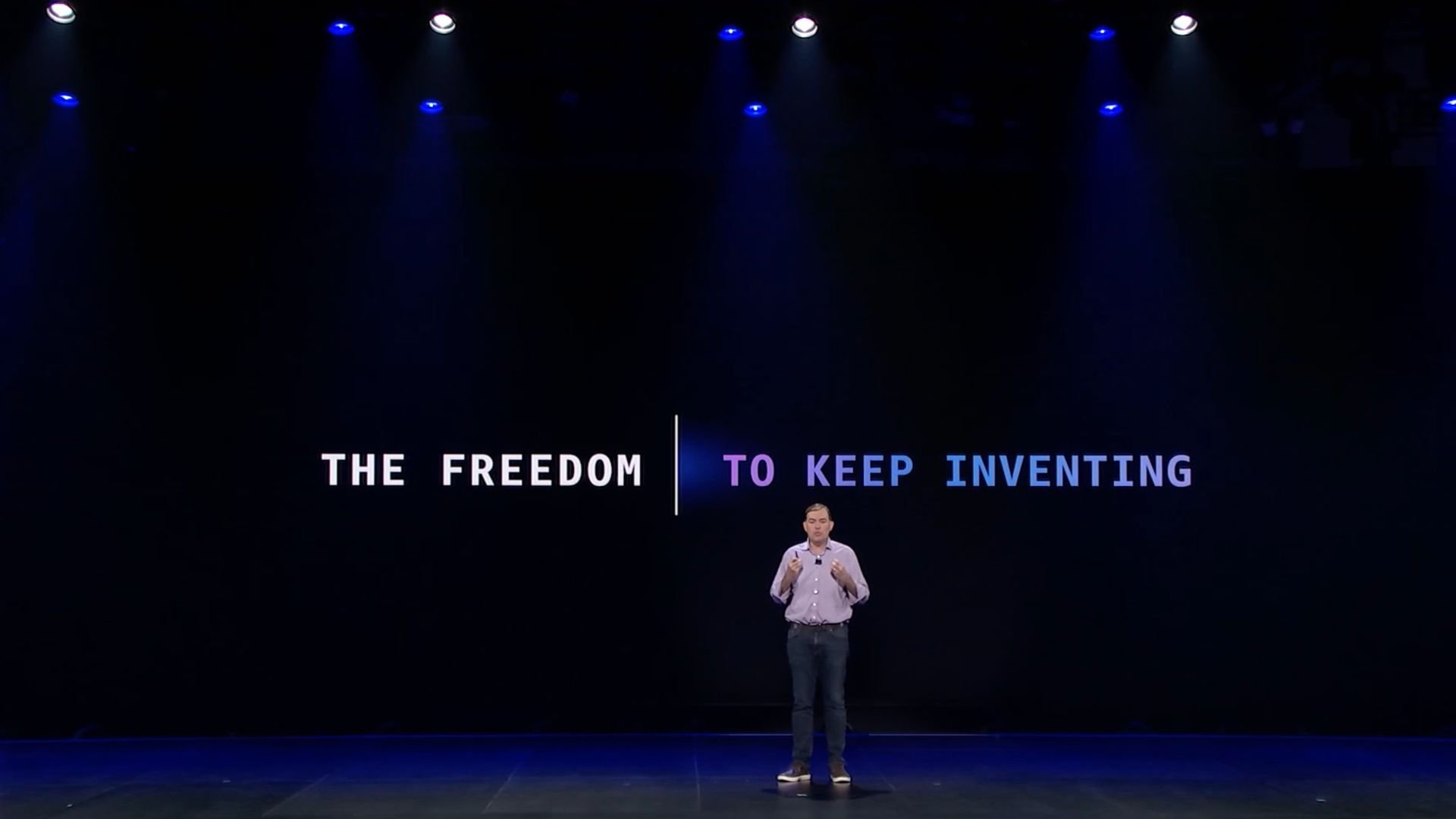
When I explain the cloud to younger engineers, I always go back to the same idea: AWS democratized technology. Before the cloud, even tiny projects required hardware, budgeting cycles, long procurement steps, and a bit of luck. AWS removed those barriers and opened the door for a generation of innovators to test ideas without asking permission.
This year's keynote started with that exact same story—and then brilliantly pivoted to show they're doing it again with AI.
The keynote opened with the fundamentals, but not in a boring way. They were painting a picture of massive scale—38 regions with 120 availability zones, 3.8 gigawatts of new data center capacity added in just the past year, and a private network that's grown 50% to over 9 million kilometers of cable. But this wasn't chest-thumping. It was table-setting. They were reminding us that real democratization requires incredible scale. You can't make something accessible to everyone without the infrastructure to support everyone.
Then came the pivot, subtle but deliberate. They moved from talking about millions of database customers to highlighting that over 100,000 companies are now using Bedrock for AI inference. The message was clear: we've done this before with infrastructure, and now we're doing it with AI.
The compute story really drove this home. While everyone else is fighting over GPU allocations, treating them like scarce resources that only the chosen few can access, AWS is creating abundance through custom silicon. With over a million Trainium chips already deployed, and each generation delivering dramatic performance improvements, they're turning AI compute from a luxury into a utility. Trainium 3 is now generally available with multiple times the performance of Trainium 2, and they're already previewing Trainium 4 with even bigger leaps ahead.
But hardware is just the foundation. The real democratization story came with NovaForge. Think about what building a custom AI model meant until now: either you used someone else's generic model and accepted its limitations, or you spent hundreds of millions training your own from scratch. NovaForge breaks that false choice. It lets you blend your proprietary data into the training process itself, creating what AWS calls "novellas"—models that deeply understand your specific domain without losing their general capabilities.
When they shared that over 50 customers have each processed more than a trillion tokens through Bedrock and that Reddit successfully consolidated multiple specialized systems into one unified model, you could feel the room lean in. This isn't theoretical. Companies are already doing what only tech giants could do a year ago.
The developer enablement story was even more powerful. AWS showed an internal project that traditionally would have required 30 people working for 18 months being completed by just 6 people in 76 days. That's not an incremental improvement—that's a complete reimagining of what's possible. With hundreds of thousands of developers already using their Kiro environment, they're not just giving developers better tools; they're giving them AI agents that work alongside them, learning their patterns, understanding their codebases, and taking on entire tasks independently.
But the real masterstroke was the Frontier Agents. AWS took their decades of experience in security and operations—the expensive, hard-won lessons from operating at massive scale—and encoded it into agents that any team can use. The Security Agent doesn't just scan your code; it embeds the security practices that AWS uses internally, turning pen testing from an expensive annual event into something you can do continuously. The DevOps Agent doesn't just help with incidents; it brings Amazon's operational excellence to every deployment.
What struck me most was how deliberately they drew the parallel between eras. In the infrastructure era, only enterprises could afford data centers, only big teams could manage operations, and only specialists understood the complexity. AWS changed all that. Now in the AI era, we're seeing the same barriers—only tech giants can train models, only ML teams can prevent hallucinations, and only large companies can afford proper security. And AWS is systematically knocking down each barrier with the same playbook that worked before.
The keynote wasn't subtle about the opportunity in front of us. They highlighted that the vast majority of top AI companies and disruptive startups are already building on AWS. The infrastructure is proven and ready. Every announcement, from custom silicon to model training to autonomous agents, removes another excuse for not building AI into production. They've made the complex simple, the expensive affordable, and the exclusive accessible.
We're at that same inflection point we saw fifteen years ago with cloud infrastructure. The tools are here. The barriers are falling. The expertise that used to require massive teams is now encoded into services any developer can use. The same disruption that let startups compete with enterprises on infrastructure is happening again with AI, but this time it's moving faster because AWS knows exactly how to democratize technology.
The window is open now. Just as AWS created a generation of companies that couldn't have existed before the cloud, we're about to see the same thing with AI. But this time, the playing field is level from day one. You don't need to be a tech giant to build frontier AI anymore. You just need to build.
The keynote's message was crystal clear: we've removed every technical barrier between you and production AI. We did it once with infrastructure, and we're doing it again with AI. The only question left is what you're going to create with these capabilities. Because if history is any guide, the developers who move now, who build while others are still debating, will define what AI actually means in production.




Comments